Where to Go
Accessible skiing in Colorado: why we rate Winter Park
Specialist instruction makes this Colorado resort worth considering for disabled skiers, but the best holidays start with questions about everything beyond the piste.
By the Before You Book Editorial Team
Published · 6 min read
Quick answerWinter Park in Colorado offers adaptive skiing through the National Sports Center for the Disabled, including sit-ski equipment and trained instruction. We rate it for a first mountain holiday, provided you confirm individual support, transport and room requirements before booking.
Colorado’s Winter Park deserves a place on the shortlist for disabled travellers who want a ski holiday, not simply a hotel with a mountain view. Its strongest draw is the National Sports Center for the Disabled (NSCD), where specialist instruction and adaptive equipment can open the slopes to people for whom conventional ski lessons would not work.
We rate it particularly as a place to investigate for a first adaptive skiing trip. That is not a promise that every visitor’s requirements will be met: a successful holiday depends just as much on transfers, bathrooms and personal assistance as it does on what happens after the chairlift.
What happened
Winter Park offers a practical answer to a question many prospective skiers face: can someone who uses a wheelchair actually join a mountain holiday? Through the NSCD, the answer can be yes. Its approach brings together an assessment of the participant, suitable equipment and instruction, rather than expecting everyone to adapt to the same lesson.
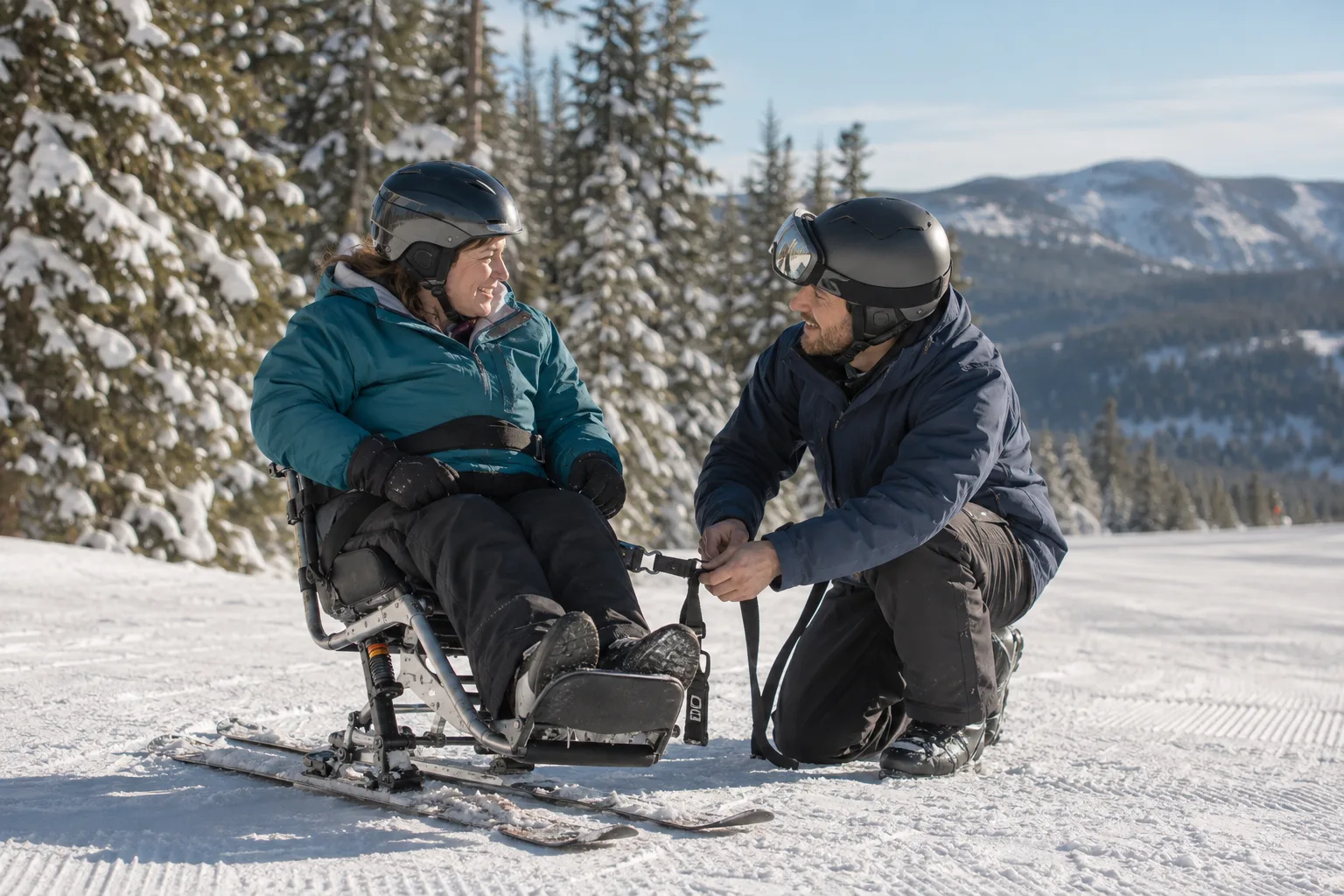
A sit-ski is one option. It supports the skier in a seat mounted above one or more skis; the design and support arrangements vary. The Dynamique model used at Winter Park has two skis and a mechanism that raises the seat for loading onto a chairlift. That matters because getting uphill is as essential as getting down.
An instructor can assist from behind using a tether, helping manage direction and speed. Depending on the skier’s abilities, they may also contribute to turns through movements such as leaning. The amount of assistance should follow the individual, not assumptions about their diagnosis or previous sporting experience.
Our reason for recommending a closer look is this combination of equipment and expertise. A resort can have accessible bedrooms without providing a workable route onto the snow. Here, the specialist programme is the starting point, giving travellers something specific to discuss before committing to a transatlantic trip.
For a mixed group, that creates the possibility of sharing a skiing destination without everyone following the same lesson plan. As with any holiday with friends and children, agree which parts of the day you hope to spend together. Meeting for lunch may be more realistic than expecting the whole party to ski every run together.
The background
A specialist operation with a long history
The NSCD’s skiing work began in 1970, when Hal O’Leary taught a group of young amputees at Winter Park. The organisation also supports competitive athletes. For holidaymakers, that history gives the resort a distinctive foundation: adaptive skiing is an established part of its sporting life, rather than simply an equipment-hire option.
Adaptive does not necessarily mean seated. The term covers changes to equipment, instruction or support that help a person participate. A wheelchair user’s requirements may differ substantially from another wheelchair user’s, and someone who walks independently may still need an adapted approach. Describe what helps you function comfortably, rather than relying on a broad accessibility label.
Nor does a sit-ski eliminate the physical demands of a mountain day. Transfers, maintaining a comfortable position, cold weather and fatigue all need thought. Discuss seating support, pressure management, communication and breaks with the programme. If you have medical concerns about altitude or exertion, ask your own clinician for individual advice before committing.
The journey and the bedroom count too
The Winter Park Express provides a rail connection from central Denver to the resort, offering an alternative to a road journey into the mountains. It is not an airport-to-bedroom service. Check the operating calendar with Amtrak, then establish how you will travel from the airport to the station and from the resort stop to your accommodation.
Ask specifically about wheelchair spaces, boarding arrangements, toilets and any equipment dimensions the operator needs. A journey that works with a folding manual chair may require different arrangements for a powered wheelchair. Leave space in the itinerary for delays rather than building the holiday around a tight flight-to-train connection.
The Vintage Hotel is an accommodation option with accessible rooms, including roll-in showers. Treat that as a starting point for questions, not a guarantee of suitability. Request photographs and measurements for the actual room category, including bed height, clear space alongside the bed, bathroom layout and the route from reception.
Distance from the slopes can also be deceptive. A short route on a map may involve gradients, snow or a shuttle that does not meet your needs. Ask the hotel how guests reach the adaptive programme in winter conditions, where mobility equipment can be stored and what happens if the usual route is unavailable.
What people are saying
The useful conversation about accessible skiing is not whether it is inspiring. It is who provides which assistance, and where that assistance stops. Ski instruction, transfers into equipment and personal care are different services. Do not assume that booking one includes the others, or that a travelling companion will automatically be able to fill any gaps.
A productive first enquiry sets out your requirements plainly: how you transfer, what seating support you use, whether you need help dressing, and how you prefer instructions communicated. Ask the team to explain a typical session from arrival to departure. That walkthrough can reveal practical issues that a list of facilities misses.
Discuss chairlift loading and unloading before the lesson, including what assistance is provided. Ask how the team handles a fall or an equipment problem and what the evacuation arrangements mean for you. Familiarity can reduce anxiety, but the aim is informed participation rather than a promise that skiing carries no risk.
Insurance deserves the same attention. Ask the insurer to confirm cover for adaptive skiing, relevant pre-existing conditions, mountain rescue and medical treatment. Establish how hired specialist equipment and your own mobility aids are treated. Our guide to holiday safety checks before travelling explains why preparation needs to cover activities as well as the destination.
Finally, resist the temptation to measure success in hours skied. A shorter session with comfortable positioning and enough energy for dinner may be a better holiday than a full day endured for the itinerary. Build the trip around the participant’s preferences, including the perfectly reasonable option of stopping early.
What happens next
Start with the adaptive programme, not a non-refundable flight. Give the NSCD your proposed dates and requirements, then ask which equipment and instructor support can be arranged. Get written confirmation of session length, what is included, cancellation conditions and any assistance you must organise separately.
Only then match transport and accommodation to those sessions. Ask airlines how they handle your particular wheelchair or mobility aid, including any battery information required. Record equipment dimensions and handling instructions. Our pre-travel holiday checklist can help keep the remaining paperwork and bookings in order.
Compare the whole holiday cost rather than the headline lesson fee: flights, baggage, transfers, accommodation, meals, insurance and any additional support all belong in the calculation. Request current prices directly from providers and ask whether lift access and equipment are included. Currency conversion can also change the sterling total.
Our verdict: Winter Park is a persuasive choice for travellers who value specialist adaptive skiing support. Book it around confirmed assistance and a suitable place to stay, leaving time to recover from the journey. The mountain is the attraction; a workable day from waking up to getting back to bed is what makes the holiday.
Why this matters
For UK travellers, a Colorado ski trip is a substantial commitment of time and money, so accessibility needs to be confirmed before deposits become non-refundable. Ask for a joined-up plan covering lessons, mobility equipment, transfers and the exact bedroom you will use. Keep written answers with your booking documents, and establish who to contact if an arrangement changes. Our practical holiday checklist is a useful final check once those individual requirements are agreed.
From Before You Book Travel · Sponsor
Plan your trip with Becky
Tell Becky where you're dreaming of and she'll come back with a personalised holiday plan. No obligation, and no call centre.
Common questions
- can wheelchair users go skiing in Colorado?
- Yes, some wheelchair users can ski with adaptive equipment and specialist instruction. Winter Park’s National Sports Center for the Disabled offers adaptive skiing; suitability and the required support need to be assessed individually.
- what is a sit-ski?
- A sit-ski supports a skier in a seat mounted above one or more skis. Different designs provide different support, and an instructor can use a tether to help manage direction and speed.
- is Winter Park good for adaptive skiing beginners?
- We rate Winter Park as a destination to investigate for a first adaptive skiing holiday because it combines specialist instruction with adapted equipment. Confirm that the programme can meet your specific needs before booking travel.
- can you get a train from Denver to Winter Park?
- Yes, the Winter Park Express connects central Denver with the resort. Check operating dates and accessibility arrangements with Amtrak, and organise the separate journeys from the airport and to your hotel.
- does the Vintage Hotel have accessible rooms?
- Yes, the Vintage Hotel offers accessible accommodation, including rooms with roll-in showers. Request details of the exact room category, particularly bed height, transfer space and bathroom layout.
- do I need special insurance for adaptive skiing?
- You need a policy that covers your planned adaptive skiing activities and relevant medical conditions. Ask the insurer to confirm mountain rescue, medical treatment and cover for specialist equipment and mobility aids.
- what should I book first for an accessible ski holiday?
- Confirm suitable adaptive instruction and equipment first. Then arrange compatible transport and accommodation, checking cancellation terms and clarifying which assistance is included before making non-refundable payments.
Sources
- The Independent Travel: I went to Colorado to discover if accessible skiing is truly possible | The Independent
- youtube.com: BACKPACK is this years FAT BEAR week CHAMPION - YouTube
This article was written by Before You Book using the sources listed above. Product mentions are editorial unless clearly marked as sponsored.