Where to Go
Where to go in Cornwall: coast, moors and islands
Our pick of Cornwall’s coast and countryside — and why the far west rewards an unhurried week.
By the Before You Book Editorial Team
Published · Updated · 6 min read
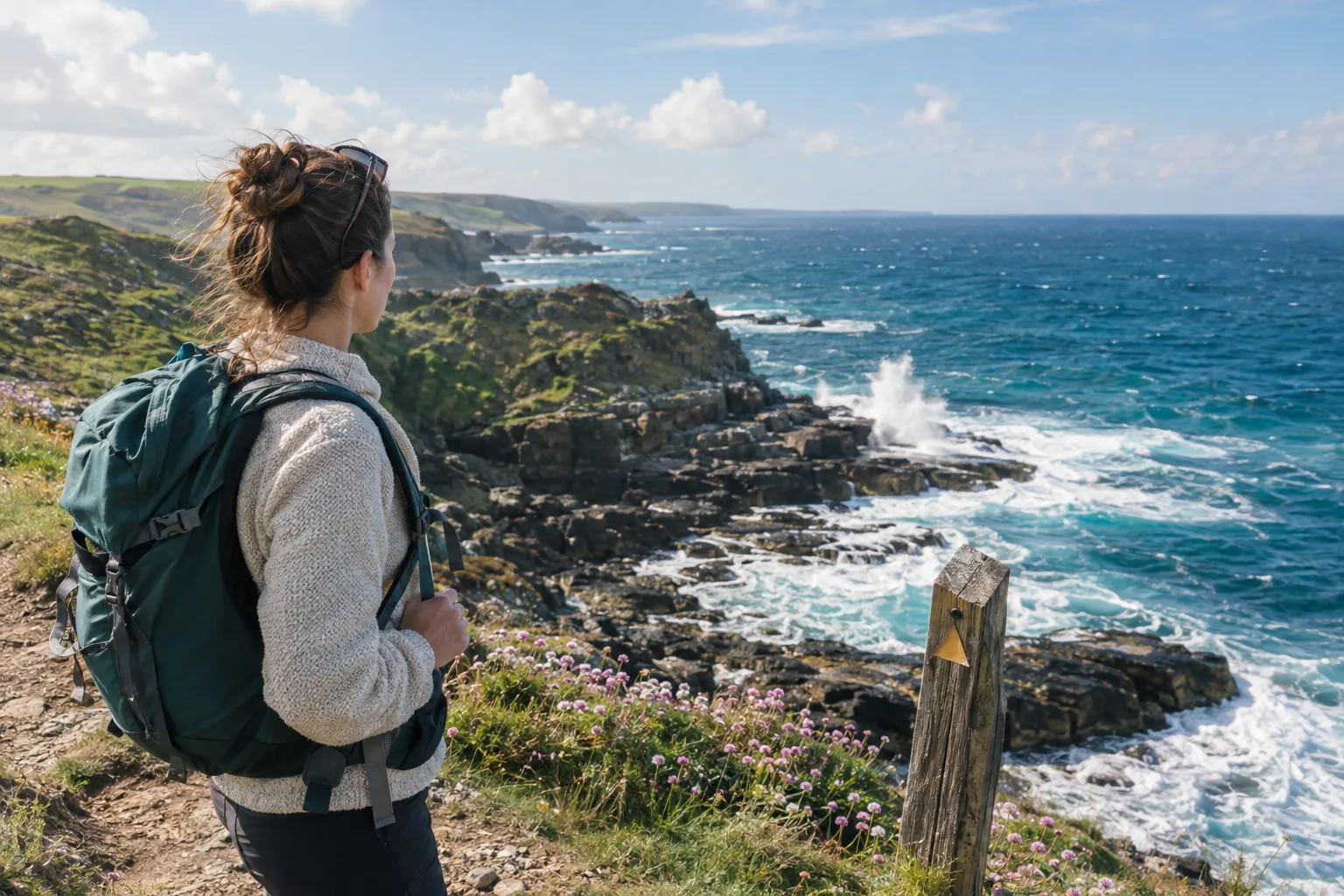
Quick answerHead for Cornwall’s Atlantic coast for beaches and surf, detour inland to Bodmin Moor for stone‑strewn walks, and save a day for tidal St Michael’s Mount and the far‑west Penwith peninsula.
Cornwall is Britain’s wild Atlantic edge — a county that feels almost like an island, edged with surf beaches and granite headlands, and bound by a border that is mostly a river. If you’ve been weighing up a week in the far southwest, we think the sweet spot is a coast‑first itinerary with a couple of inland days and time to breathe at the very end of the land.
Our take: base yourselves on the north coast for wave‑washed days, then swing south for sheltered coves and that postcard‑perfect tidal island. When the weather turns, swap beach plans for moorland walks and engine houses on sea cliffs. One line from a recent travel film about Cornwall rings true: “very little is ever completely lost,” the filmmaker notes — a neat way of describing how story, stone and sea tangle together here.
What happened
Look at a map and Cornwall is almost cut off by water. The River Tamar rises near the north coast, then runs south to the Channel for around 60 miles; for most of that distance it’s the county line. Historians date a Cornish kingdom to the early medieval period, with the border later fixed on the Tamar by King Athelstan. You feel that difference as soon as the train rolls over Isambard Kingdom Brunel’s Royal Albert Bridge at Saltash, opened in 1859, when the railway first crossed high above the river into Cornwall.
For visitors, the headline act is the coast — and the north shore hits hard and fast. Tintagel occupies a slate headland split from the mainland by a narrow neck, with Atlantic caves below. The Arthur story started in books centuries before the fortifications here; the medieval castle went up in the 1230s, long after the legend had taken hold. Recent decades of archaeology have also turned up imported pottery from the Mediterranean and Spain, suggesting a high‑status site in the fifth to seventh centuries.
West again, Bedruthan’s staircase beaches, Newquay’s long sands and surf breaks, and the broad sweep around St Agnes and Perranporth make this the obvious base for beach families and first‑timers. Inland, Bodmin Moor gives you tors, standing stones and an older Cornwall of rough grass, bog and granite outcrops — a completely different day out when the sea breeze is blowing sand sideways.
On the south coast, harbour towns stack up around drowned river valleys. Polperro and Fowey sit on steep sides; Charlestown keeps its tall‑ship harbour feel. Further west, the gardens at Heligan and the deep natural harbour at Falmouth mark the turn towards The Lizard, where Kynance Cove’s serpentine cliffs and turquoise shallows offer one of Britain’s most photogenic bays.
Then comes the showstopper: St Michael’s Mount, a tidal island linked to Marazion by a causeway that appears at low tide and vanishes under water at high. Beyond Penzance, Penwith narrows to the Tin Coast, where engine houses stand above the Atlantic and mine tunnels once ran beneath the seabed. Porthcurno hides a white‑sand bay and the cliff‑cut Minack Theatre. Land’s End is the last car park before sea and sky, but keep going: on clear days, the Isles of Scilly sit low on the horizon, a world apart.
The background
Cornwall’s identity starts with its geography. That long river border and a language of its own gave this corner a separate story within England. You’ll still spot bilingual road signs and the black‑and‑white flag of St Piran flying from fishing boats and pub gardens.
Coastlines differ by side. The north coast faces the Atlantic, so beaches here are broader, surf heavier and cliffs often taller. It’s a magnet for lesson‑ready surf schools and sand‑castle days. The south is gentler: coves, river estuaries and day‑sailing harbours mean calmer waters and more sheltered swims. The far west cranks up the drama again, with granite spines and prehistoric sites scattered across the moors near Zennor and Carn Galva.
History stacks in layers you can still walk around. Tintagel ties medieval myth to earlier trade; Launceston’s hilltop tower once watched the main road across the border; and the engine houses of St Just and Botallack are reminders of the nineteenth‑century mining boom that linked Cornwall to global industry. Charlestown’s harbour keeps the look of the same era, while Porthcurno’s Minack Theatre proves one person and a cliff can build a stage like no other.
Travel is easy without a car if you plan. Direct trains run to Cornwall from London via the Tamar crossing, and the Night Riviera sleeper links the capital and Penzance most nights. For anyone who needs assistance on the railway, it’s worth booking support in advance; our guide to how to arrange help for UK rail journeys explains what to ask for and when.
Timing matters more than you think. Summer brings the busiest beaches and fullest restaurants; shoulder seasons swap crowds for quieter paths, cheaper stays and still‑swimmable seas on kinder days. Autumn light on empty dunes is a genuine treat, though daylight hours shrink — our piece on how the clock change affects UK trips is a handy refresher if you’re driving back after tea.
Budget‑wise, self‑catering dominates rural stays, with boutique hotels clustered around St Ives, Newquay and the Roseland. If you’re a frequent rail traveller, check whether you or a family member qualifies for a Railcard; our explainer on who is eligible for the Disabled Persons Railcard outlines one route to savings.
What people are saying
Ask seasoned Cornwall‑goers and you’ll hear the same refrains. First, don’t try to do the whole county in three days — the roads are slow, and the best thing about Cornwall is the time it gives back if you don’t chase it. Second, pick a coast and explore it properly. On the north, walk the South West Coast Path between Bedruthan Steps and Mawgan Porth for clifftop drama without committing to a multi‑day hike. On the south, link Fowey to Polruan and the estuary edges by ferry and foot.
Families swear by a north‑coast base with easy‑to‑reach beaches, then a mid‑week switch to the south for calmer swimming. Book surf lessons rather than guessing the flags, and check tide times before committing the kids to a long beach day; that same rule applies to St Michael’s Mount, where the causeway is the star when it’s out and a lovely boat hop when it’s not.
Photographers love late afternoons on west‑facing bays: Godrevy to Gwithian, Sennen to Gwenver, Porthmeor in St Ives. Walkers head for Bodmin Moor’s tors in any season and the Penwith ridge when winds ease. Garden fans rate spring for Camellias and rhododendrons around Heligan and Falmouth. And on wet days, museums in Falmouth and the mining heritage sites along the Tin Coast take the sting out of the weather.
Practical advice from locals is simple. Park early in small coves. Carry cash for village car parks that don’t take apps. Pre‑book popular restaurants in high season. Check bus timetables before circular walks. And always have a Plan B when the Atlantic decides the forecast.
What happens next
If you’ve got a week, we’d map it like this. Days 1–3: north coast base between Padstow and St Agnes for beaches, clifftop walks and a Tintagel day trip. Day 4: cut inland to Bodmin Moor for a tors‑and‑stone circles loop before dropping to the south coast. Days 5–6: Lizard day for Kynance Cove and Porthleven, plus a Falmouth wander. Day 7: west to Marazion for St Michael’s Mount on the tide, then Penwith’s Tin Coast and Porthcurno.
Want an extra flourish? Leave a clear day for the very far west. Walk from Zennor to Gurnard’s Head and back, or Sennen to Land’s End and out to the last granite stacks. With luck, the Isles of Scilly will sit on the rim of the sea. On the best days, that glimpse alone justifies the miles.
If you’re travelling by rail, book the sleeper or daytime trains early for better fares and seats together. Drivers should allow more time than the satnav suggests on coastal lanes. And if mobility is a consideration, call ahead to check access at coves and heritage sites; gradients and steps can be steep, but many headline stops publish clear guidance and offer alternatives when the tide or path narrows.
Why this matters
Cornwall rewards a plan that matches the coast to your group: surf‑tipped north shores, gentler south coves and a moorland day as a weather‑proof pivot. Book rail or parking ahead in summer, check tide times for St Michael’s Mount, and don’t over‑schedule. If you need assistance, arrange support in advance using our guide to booking help on UK trains.
From Before You Book Travel · Sponsor
Plan your trip with Becky
Tell Becky where you're dreaming of and she'll come back with a personalised holiday plan. No obligation, and no call centre.
Common questions
- where to go in cornwall for a first visit
- Base on the north coast for beaches and surf, day trip to Tintagel, then switch south for Kynance Cove and St Michael’s Mount. Finish in Penwith.
- best time to visit cornwall for fewer crowds
- Late spring and autumn bring quieter paths, easier restaurant bookings and softer light. Summer is busiest on beaches and roads.
- is cornwall easy to do without a car
- Yes, if you plan. Use direct trains across the Tamar, local buses, and the Night Riviera sleeper to Penzance. Check timetables before coastal walks.
- is tintagel castle linked to king arthur
- The legend pre‑dates the castle. The medieval fortress was built in the 1230s, centuries after Arthurian stories became popular.
- what is the must‑see on the lizard peninsula
- Kynance Cove. Its serpentine cliffs, white sand and clear shallows make it one of Britain’s most photogenic bays.
- how do i visit st michael’s mount
- Time your visit to the tide: walk the causeway at low tide or take small boats when the path is covered.
- what is the tin coast in cornwall
- It’s the Penwith stretch west of St Just where nineteenth‑century engine houses stand above the Atlantic, marking Cornwall’s mining heritage.
- can i see the isles of scilly from land’s end
- On very clear days you can glimpse the Isles of Scilly from far‑west viewpoints. Visibility varies with weather and haze.
Sources
- The Independent Travel: Cornwall
- youtube.com: Cornwall | The Hidden Kingdom at the Edge of England | 4K Travel Documentary - YouTube
This article was written by Before You Book using the sources listed above. Product mentions are editorial unless clearly marked as sponsored.