Deals & Travel Tips
Clocks go back: how the time change affects UK travel
UK clocks go back on Sunday 25 October 2026. Here’s what that means for flights, trains, coaches and your Sunday plans.
By the Before You Book Editorial Team
Published · Updated · 6 min read
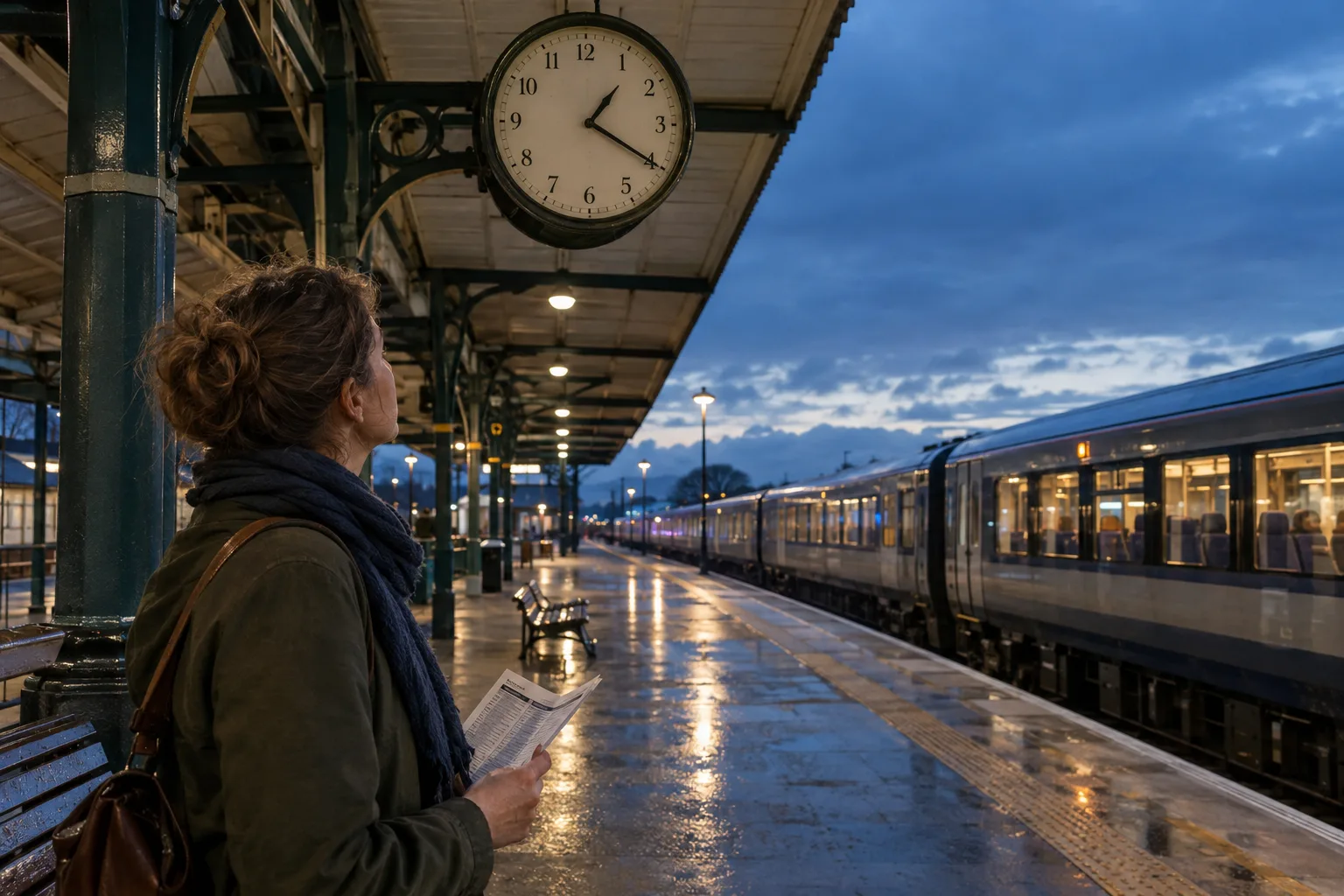
Quick answerUK clocks go back one hour at 02:00 BST on Sunday 25 October 2026, moving to 01:00 GMT. Expect tweaks to late‑night bus, coach and rail timetables, and mind differing time changes abroad.
Timeline
25 October 2026
UK clocks go back one hour at 02:00 BST, returning to GMT.
30 October 2026
Egypt ends Daylight Saving Time for 2026.
1 November 2026
United States clocks go back on the first Sunday of November.
28 March 2027
UK clocks go forward to British Summer Time.
This Sunday, the UK moves from British Summer Time to Greenwich Mean Time. At 02:00 BST on 25 October 2026, the clocks step back to 01:00 GMT, gifting an extra hour in bed and nudging sunset earlier for the months ahead.
If you’re travelling overnight, the change can ripple through bus, coach and rail timetables, while flights continue to run on local times. Here’s what to check before you doze off on Saturday night.
What happened
The UK’s annual autumn time change lands at 02:00 BST on Sunday 25 October 2026, when the clock moves back to 01:00 and the country reverts to GMT. On Sunday, you’ll notice an earlier sunset and, initially, lighter mornings — a shift that particularly affects early services and outdoor plans.
Transport operators adjust for the repeated 01:00–02:00 hour. Some overnight services add an extra run stamped 01:30 after the change, while others hold at stations to maintain their advertised arrival time. It’s worth checking the live timetable on Saturday evening if you’ve a late departure.
For aviation, nothing dramatic alters at the gate: airlines always publish departure and arrival times in local time. Your itinerary remains valid without any mental gymnastics — what can change is the offset between countries if you’re crossing borders overnight.
The background
Daylight Saving Time was adopted to make better use of evening light in summer; it ends across most of Europe on the same Sunday as the UK, reverting the continent to standard time together. This broadly aligned change reduces confusion for weekend trips between neighbouring countries.
Not every nation shifts their clocks. India, Japan, South Africa, Brazil and Turkey keep the same time all year, so time differences between the UK and those destinations all move by one hour from Sunday. If you’re flying long‑haul to non‑DST countries this weekend, your flight duration doesn’t change, but your perceived arrival time can feel earlier or later because the offset has moved.
North America changes a week later. The United States switches back on Sunday 1 November 2026, creating a temporary one‑hour swing in time differences with the UK during that week. If you have US calls or connections, double‑check the local time for meetings and domestic links.
Egypt ends its Daylight Saving Time on Friday 30 October 2026, so UK–Egypt time differences also shift twice within the same week. Multi‑stop itineraries through hubs in the Middle East or North Africa may therefore show slightly unusual layover lengths around the change.
Phones and most connected devices update automatically, but analogue watches, travel alarm clocks and some car systems won’t. If you rely on a manual alarm for a Sunday start — an early train, a marathon, or the school trip coach — set it back one hour before bed.
If you’re heading to the airport first thing on Sunday, remember terminal opening times and lounge hours switch to GMT along with everything else. Early check‑ins can feel ‘earlier’ than usual, especially if you’ve planned around a pre‑dawn drive.
We rate a quick walkthrough of your itinerary on Saturday afternoon: confirm booking references, recheck departure times in the operator’s app, and take screenshots. It’s a five‑minute habit that also helps when services are disrupted for other reasons, as we’ve covered in our guide to Ryanair and easyJet cancellations: your UK flight rights now.
Flights: what actually changes — and what doesn’t
- Tickets list local times at both ends, so your boarding and arrival clocks are correct without you doing anything.
- Overnight flights spanning the change can look an hour longer or shorter on paper only because the UK offset to the destination has shifted.
- If you’re connecting in Europe on Sunday, most hubs switch the same night as the UK, which keeps connection windows consistent.
- For the US, the one‑week lag can add or remove an apparent hour from UK meeting times; adjust calendar invites accordingly.
If you’re eyeing late‑autumn escapes made easier by seasonal capacity, our rundown of new winter flight routes from UK airports is a good place to start.
Trains, coaches and buses: the extra hour effect
Overnight rail replacement buses and long‑distance coaches sometimes duplicate services during the repeated 01:00–02:00 window. Others pause to realign with advertised arrivals. Either way, the safest approach is to plan to be at your stop early and watch the live tracker on the night.
Sunday can also bring planned rail engineering works, with first departures moving earlier in darker mornings. If you’re heading to an early flight via rail, factor in the wider buffer we recommend in our Manchester Airport travel advice for October half term — still useful well beyond the school break.
Assistance and family logistics
Pre‑booked travel assistance windows at stations and airports switch to GMT too. If you’ve arranged help, reconfirm your times, especially for overnight services, and keep your booking reference handy. Our guide to accessible travel: how to book airport, rail and cruise help walks through what to ask for and when.
Families catching early ferries or flights on Sunday should reset children’s bedtimes the night before if possible; the lighter mornings right after the change can briefly help early starts.
What people are saying
Forecasters note that lighter mornings can improve early‑day visibility initially, while earlier sunsets reduce evening light for driving and cycling commutes. Transport operators typically flag any overnight timetable quirks in their apps from Saturday afternoon; it’s worth turning on notifications for your booking.
Policy‑wise, the current position is stable. As BBC Weather reports, “Currently there are no plans in the UK to get rid of the biannual clock change.” That means the same drill returns in spring 2027, when the UK moves back to British Summer Time.
Seasoned long‑haul travellers swear by switching watches to destination time as soon as you board — a simple trick that aligns meals and sleep to local rhythms and makes the clock change irrelevant in the air. It pairs nicely with our practical playbook for points and timings if you’re stacking connections, covered in British Airways Avios: our guide to status and transfers.
If you’re transiting the US in the following week, remember that airport security programmes and boarding times still reflect local clocks. Our explainer on TSA PreCheck, Clear and Global Entry changes in 2026 is a useful refresher if you’re planning a stateside connection soon.
Common pitfalls we see each autumn: relying on a bedside analog alarm that doesn’t update, forgetting a pre‑booked taxi time is on GMT, and assuming every European country moves with the UK. Most do, but not all — always recheck the local time at your specific airport or station.
What happens next
From Sunday, expect earlier nightfall and a short‑lived boost of earlier sunrises. Timetables across UK transport reflect GMT until spring, with Sunday service levels as usual for late October.
The United States follows a week later, on 1 November 2026, briefly changing time differences for transatlantic calls and itineraries. Egypt’s change on 30 October also affects connections that week, so multi‑leg travellers should keep an eye on layover times when re‑checking apps.
The UK flips forward again on Sunday 28 March 2027, returning to British Summer Time. We’ll flag any operator‑specific guidance closer to that date, especially if it overlaps with holiday travel, and continue to track seasonal route launches that can make winter sun escapes easier — see our take on new winter flight routes from UK airports for ideas.
Related: Wizz Air Luton–Sofia flight diverted to Budapest after bomb threat
Related: Antalya COP31 traffic warning: get to the airport 4 hours early
Related: How to pack batteries for flights: UK rules and tips
Why this matters
The clock change mostly calls for common‑sense checks: confirm overnight departure times, reset any manual alarms, and be aware that time differences with the US and non‑DST countries shift this week. If plans go awry, know your airline and rail rights — start with our guide to Ryanair and easyJet cancellations: your UK flight rights now.
From Before You Book Travel · Sponsor
Plan your trip with Becky
Tell Becky where you're dreaming of and she'll come back with a personalised holiday plan. No obligation, and no call centre.
Common questions
- when do the clocks go back in the uk 2026
- At 02:00 BST on Sunday 25 October 2026, the clocks go back to 01:00 GMT.
- what time do phones change when clocks go back
- Most smartphones and connected devices update automatically at 02:00 BST, switching to 01:00 GMT. Manually change analogue clocks and standalone alarms.
- how does the clock change affect flights
- Airlines publish times in local time, so your ticket stays correct. Time differences with some countries shift, which can make flights seem an hour longer or shorter on paper.
- will overnight trains and coaches run twice at 1am
- Some do add or adjust services during the repeated 01:00–02:00 hour, while others pause to meet advertised arrivals. Check live timetables on Saturday night.
- do europe and the usa change clocks the same day
- Most of Europe changes with the UK on 25 October 2026. The United States follows on Sunday 1 November 2026.
- which countries don’t use daylight saving time
- India, Japan, South Africa, Brazil and Turkey do not change clocks, so UK time differences with them shift by one hour from Sunday.
- when do the clocks go forward again in the uk
- On Sunday 28 March 2027, the UK moves to British Summer Time.
- should i reset my watch when boarding a long‑haul flight
- Yes. Set it to your destination’s local time when you board to simplify the change and ease jet lag.
Sources
- Condé Nast Traveller UK: Clocks going back: how the time change affects UK travel | CN Traveller
- bbc.com: When do the clocks go back in 2026? - BBC Weather
This article was written by Before You Book using the sources listed above. Product mentions are editorial unless clearly marked as sponsored.