Holiday News
Burford coach restrictions: what Cotswolds visitors need to know
School safety concerns have prompted new coach limits on Priory Lane, making arrival arrangements an important question for anyone booking a Burford excursion.
By the Before You Book Editorial Team
Published · Updated · 6 min read
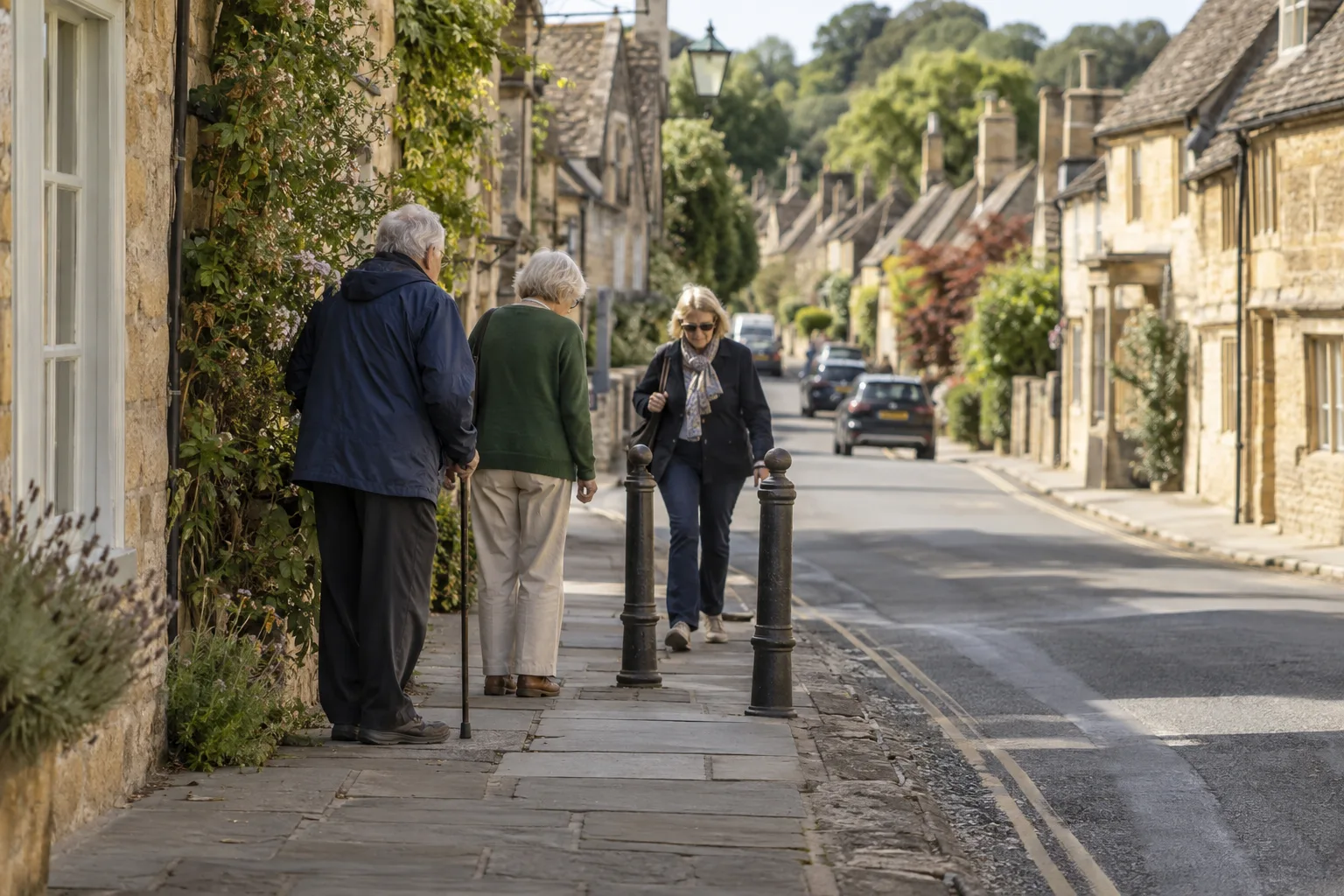
Quick answerBurford has approved a 12-metre length limit for buses and coaches on Priory Lane, alongside school stopping restrictions. This is not a town-wide ban on coach visits, but passengers should check their operator’s drop-off point and any walking distance before travelling.
Timeline
December 2024
The first consultation on the proposed restrictions took place.
February 2025
A council meeting deferred the proposals.
8 October
The restrictions were considered and approved through Oxfordshire County Council’s delegated transport decision process.
16 October
The decision document set 5pm as the effective time, unless the decision was called in for scrutiny.
Holidaymakers booking a coach trip to Burford should ask exactly where they will get off after approval of restrictions designed to protect children outside a primary school. The Cotswolds town’s Priory Lane is to have a 12-metre length limit for buses and coaches, with separate measures to prevent stopping around the school.
This is a targeted road-safety decision, not a closure of Burford to visitors or a town-wide coach ban. Our view: it is a sensible reason to scrutinise the practical details of an excursion, rather than strike the town from your itinerary. For passengers, the important question is how an operator will deliver the visit safely and comfortably.
What happened
Oxfordshire County Council approved recommendations considered at its delegated transport decision meeting on 8 October. The scheme concerns Priory Lane, where manoeuvring large vehicles has raised safety concerns near the primary school. The proposals followed minor accidents outside the school, giving the access debate a specific focus beyond general frustration with visitor traffic.
Alongside the vehicle-length limit, the approved measures include giving existing school keep-clear markings formal status and introducing a no-stopping restriction between 8am and 5pm, Monday to Friday. These are distinct controls: one concerns the size of buses and coaches using the road; the other addresses stopping at the school markings.
The scheme includes a permit exemption if the primary school needs a vehicle longer than 12 metres. That exception should not be read as permission for ordinary sightseeing services to continue using oversized coaches there. Tour operators need to establish which rules apply to their particular vehicle and route, rather than assume all passenger transport is treated alike.
The council’s decision document identifies 5pm on 16 October as the point when the decision becomes effective, unless it is called in for scrutiny. A decision taking effect and restrictions being operational on the street are not necessarily the same milestone. Travellers should check current arrangements with their operator; drivers must follow the applicable road signs and legal restrictions.
The background
Burford’s appeal and its transport difficulties stem partly from the same thing: it is a historic market town, not somewhere laid out around modern touring vehicles. The council report identifies limited space in or near the centre for parking a 15-metre coach and turning it safely. A vehicle fitting along a road is only one part of the access calculation.
The consultation history stretches back to December 2024. The proposals were deferred at a meeting in February 2025, and Burford Town Council subsequently pressed for the length restriction to proceed before two years had passed since that first consultation. The approval therefore follows an extended local debate rather than an overnight response to a single busy day.
For visitors unfamiliar with the geography, Burford is in Oxfordshire, on the eastern side of the Cotswolds. Its historic streets make exploring on foot rewarding, but the centre is not uniformly flat. A changed set-down location can therefore matter more than the distance alone suggests, particularly for someone using a walking aid or travelling with a pushchair.
There is also an important distinction between coach travel itself and unsuitable coach access. Shared transport can bring many visitors in one vehicle, but that does not make every narrow street an appropriate arrival point. Our guide to checking sustainable travel claims before you book explains why practical arrangements deserve as much attention as broad environmental promises.
The length threshold is not a passenger-capacity rule. A tour described as small-group does not, by itself, establish how long its vehicle is, while a compliant vehicle still has to obey stopping controls. If easy access is essential, ask about the actual transport and route rather than relying on the language used to sell the excursion.
What people are saying
Burford’s deputy mayor, Andrew Foster, has raised concerns about pupils’ safety and safeguarding, as well as damage to posts separating the footway from the carriageway. His argument puts the school environment ahead of the convenience of bringing tour groups into the lane. Those are concrete risks, not simply objections to the presence of tourists.
The town council has also acknowledged tourism’s importance while arguing that the safety of children, residents and visitors must take precedence. That distinction matters. Treating the decision as an anti-visitor measure misses the local case for it: managing how people arrive, rather than discouraging them from spending time in Burford.
Resident Thomas Watkins has pointed to the mismatch between Priory Lane’s historic layout and very large buses. Our take is that this is the right scale at which to consider the dispute. A successful sightseeing stop needs somewhere safe to unload, a workable route for pedestrians and enough space for the vehicle to leave without difficult manoeuvres.
For passengers, the common mistake is assuming that a named town on an itinerary guarantees a central drop-off. It does not tell you how far you will walk, whether there is an incline, or where the return pickup will be. Make those questions part of your pre-travel holiday checklist, especially when booking for a mixed-age group.
Good access information should be specific enough to act on. A description such as a short walk is less helpful than a distance, an explanation of the surface and gradient, and a clear meeting point. If an operator cannot yet confirm those details, anyone with limited mobility should ask when they will be available before committing to the trip.
What happens next
The next practical step for operators is to check the applicable traffic order, signs and implementation arrangements, then confirm whether their planned vehicle and route remain suitable. The approved scheme does not automatically establish a replacement coach park or drop-off point. Passengers should therefore avoid assuming there will be an equally convenient alternative immediately nearby.
If you have already booked, request an updated itinerary rather than cancelling on the strength of the headline. Ask whether Burford remains included, whether the visit’s duration has changed and whether extra walking is involved. Keep any written access assurances with your booking confirmation so you can compare what was promised with subsequent changes.
For a new booking, prioritise operators that explain arrival arrangements clearly. Ask how much of the advertised stop is free time in town and how much is needed to walk from and back to the coach. On a multi-stop Cotswolds day trip, that distinction helps you judge whether the pace will feel enjoyable or unnecessarily hurried.
Families should also check that the route from the coach has suitable pedestrian space, rather than looking only at the mileage. The same habit of assessing the actual route, not just the destination, underpins our practical holiday safety checks. Build in time to reach the agreed pickup without rushing through unfamiliar streets.
Finally, do not treat arriving by car as an automatic solution: switching transport means checking parking separately, not assuming space will be available. Burford remains a viable place to visit. The better booking is simply one that accounts for the town as it is—a working community with a school and constrained roads, as well as somewhere people come to enjoy.
Related: Family seating fees: UK plans ban, but start date is unconfirmed
Related: England tourist tax plans: what they could mean for your stay
Why this matters
For UK travellers, a change to coach access can affect the comfort of a day out without making the destination off-limits. Before paying, ask for the drop-off and pickup locations, the walking distance and any slopes or steps; get essential accessibility assurances in writing. If your excursion combines several towns, check how much usable time remains at each stop. Add these details to your holiday checklist rather than leaving them until the coach doors open.
From Before You Book Travel · Sponsor
Plan your trip with Becky
Tell Becky where you're dreaming of and she'll come back with a personalised holiday plan. No obligation, and no call centre.
Common questions
- are tourist coaches banned from Burford?
- No, the approved scheme is not a town-wide coach ban. It sets a 12-metre length limit for buses and coaches on Priory Lane, alongside school stopping restrictions.
- why is Burford restricting coaches?
- The restrictions address road-safety concerns outside the primary school on Priory Lane. The proposals followed minor accidents, with local concerns also covering damage to posts separating pedestrians from traffic.
- what is the coach length limit on Priory Lane?
- The approved limit is 12 metres for buses and coaches. A permit exemption allows for longer vehicles when required by the primary school.
- what times are the Burford school stopping restrictions?
- The approved no-stopping restriction runs from 8am to 5pm, Monday to Friday, at the school markings. Those hours should not be assumed to define when the separate vehicle-length restriction applies.
- when do the Burford coach restrictions take effect?
- The council’s decision document gives 5pm on 16 October as the conditional effective time, unless called in for scrutiny. Check current street-level implementation with the council or your operator rather than treating that milestone as confirmation of enforcement.
- should I cancel my coach trip to Burford?
- The targeted restrictions alone are not a reason to cancel. Ask your operator whether the itinerary, drop-off point, walking distance or time in town will change, particularly if you need step-free or low-effort access.
- what should I ask before booking a Burford coach tour?
- Ask for the exact drop-off and pickup locations, walking distance, gradients and time available in town. If accessibility is essential, request written confirmation of arrangements before paying.
Sources
- The Independent Travel: Cotswolds town set for new limits on tourist coaches | The Independent
- the-independent.com: Cotswolds town set for new limits on tourist coaches | The Independent
This article was written by Before You Book using the sources listed above. Product mentions are editorial unless clearly marked as sponsored.