Holiday News
Family seating fees: UK plans ban, but start date is unconfirmed
Ministers want to end charges for sitting beside children and correcting booking typos, but a corrected government announcement leaves families waiting for an implementation date.
By the Before You Book Editorial Team
Published · Updated · 5 min read
Quick answerThe UK government plans to stop airlines charging extra to seat children under 14 beside a parent or accompanying adult. As of its 2 October 2026 update, there is no confirmed start date, so families should still check their airline’s seating policy before booking.
Timeline
2025
Airlines logged more than 1,000 serious disruptive passenger incidents, according to the Department for Transport.
1 October 2026
The Department for Transport first published its announcement covering family seating, booking corrections and disruptive passengers.
2 October 2026
The department updated the announcement and removed the date by which airlines would have to apply the changes.
Families booking flights should not yet assume they can skip paid seat selection and be guaranteed neighbouring seats. The UK government wants airlines to stop charging extra to place children under 14 beside a parent or accompanying adult, but the change remains a proposal rather than a protection passengers can already rely on.
The important development is in the Department for Transport’s update of 2 October 2026: it removed the date by which airlines would have to apply the changes, saying it had been included in error. We welcome the principle, but for anyone booking a school-holiday escape, an ambition is not a seating guarantee.
What happened
The Department for Transport’s announcement, first published on 1 October and updated the following day, sets out two proposed protections against flight extras. Alongside free seating beside an accompanying adult for under-14s, passengers would gain greater freedom to fix straightforward name errors without an administration charge.
The department puts the potential cost of securing adjacent seats for a parent and child at up to £104 on a return journey. It also cites fees reaching £40 for minor booking corrections. These are upper-end examples, not standard charges or an estimate of what every traveller would save; individual airline policies and fares differ.
The seating proposal addresses a basic family need, not a general entitlement to choose any seat without paying. Parents should not interpret it as a promise of complimentary extra legroom, a particular row or enough adjacent seats for an entire extended family. The central commitment concerns a child sitting with a responsible accompanying adult.
Name corrections need a similar distinction. Fixing a spelling slip is different from replacing the person travelling. Nothing in the announcement establishes a right to transfer a ticket to someone else free of charge, so travellers should avoid treating the proposal as a broader relaxation of ticket conditions.
For now, comparing the full price remains essential. A low headline fare can look rather different once the seating arrangements your family needs are included. Our report on holiday prices rising during the booking process explains why the amount at checkout deserves more attention than the first figure advertised.
The background
There is already aviation guidance on keeping younger children close to their accompanying adults. The Civil Aviation Authority says airlines should aim to place children under 12 in the adult’s row, or no more than one row or an aisle away. That is not the same as an unconditional promise of the seat immediately beside a parent.
The proposed approach therefore changes two important things: it extends the age threshold to under 14 and targets the charge for seating the child with an adult. For parents of 12- and 13-year-olds, that age distinction is particularly relevant. Under 14 does not include children who have already turned 14.
The legal route also matters. The Civil Aviation (Consumer Protection and Regulatory Reform) Bill is intended to give the Secretary of State powers to make regulations on passenger rights and providers’ responsibilities. The Bill itself does not directly impose the family-seating fee ban; further steps would be needed to turn the policy into an enforceable requirement.
The department says delivery will follow Royal Assent, with the aviation industry involved in implementation. Although its announcement refers to helping holidaymakers ahead of the following summer, the removal of the application date means summer 2027 should not be treated as a guaranteed deadline. Booking decisions need to rest on the rules actually available, not the political timetable.
The government’s stated aim is consistency across airlines operating in the UK, rather than a measure confined to UK-registered carriers. The eventual regulations will matter for establishing the precise flights, bookings and circumstances covered. A promise of consistency is useful; a clearly defined scope is what passengers will need when challenging a charge.
What people are saying
Airlines UK, the trade body representing UK-registered carriers, has said its members already follow the existing CAA guidance and expressed surprise at the announcement. That position highlights the key distinction in this debate: following advice about proximity is not necessarily the same as guaranteeing a neighbouring seat without an additional payment.
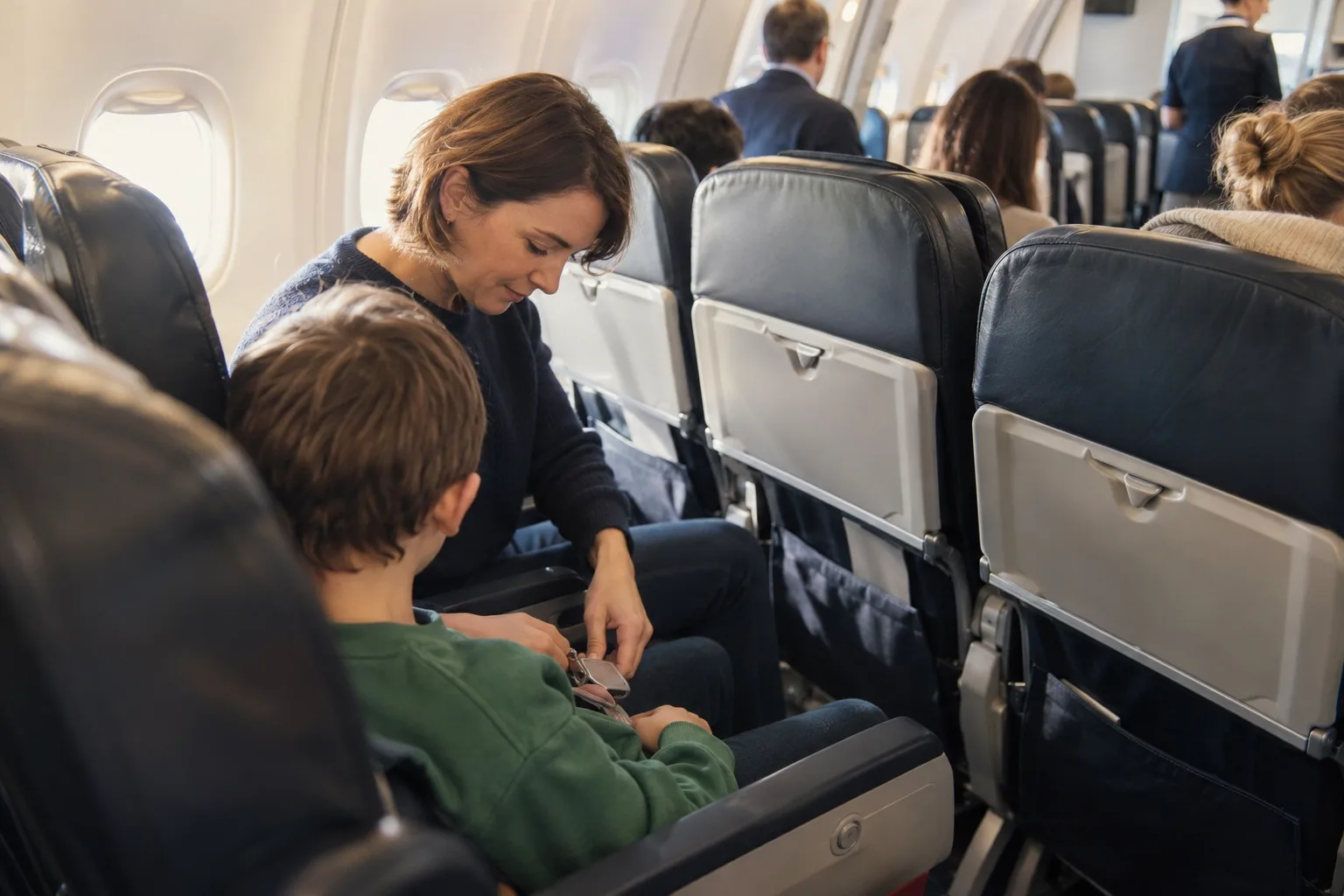
Our view is that caring for a young child should not depend on buying a discretionary seat-selection product. A parent helping with a seat belt, a drink or an anxious moment is doing something rather different from an adult paying for a preferred window seat. The rules should make that distinction easy to understand before checkout.
However, families need clarity about what happens when several adults and children travel together. One child sitting beside one accompanying adult does not necessarily require both parents, grandparents and siblings to occupy the same block of seats. Holidaymakers who want the whole party together should check the airline’s arrangements rather than assume the proposed protection covers every preference.
There is also a practical booking lesson: make the family relationship visible to the airline. Keep children and accompanying adults on the same reservation where possible. If bookings are separate, ask the carrier how it records that you are travelling together. Do not assume matching surnames will automatically connect two reservations.
For booking errors, prevention is still less troublesome than correction. Check each passenger’s details against the travel document they will use, and raise mistakes promptly with the airline or booking agent. Our pre-travel holiday checklist covers the other checks worth completing before a small administrative problem becomes a departure-day scramble.
What happens next
The next useful announcement will explain how the policy becomes a binding obligation: the regulations, their commencement date and the arrangements for applying them. Travellers should also look for clear answers about bookings made before implementation and the process for resolving a seating dispute. Until then, there is no basis for assuming previously paid fees will automatically be refunded.
Before paying for flights, read the carrier’s family-seating policy and ask a specific question: will each child have a seat beside an accompanying adult without paid selection? Keep the answer and booking confirmation. If paying remains necessary to guarantee the arrangement you need, include that cost when comparing airlines rather than leaving it as an unpleasant final-screen addition.
The same government announcement includes a separate safety initiative. The Department for Transport says airlines recorded more than 1,000 serious disruptive passenger incidents during 2025. Ministers are working with airlines and trade unions on information-sharing about persistently disruptive passengers, allowing carriers to make better-informed decisions about extending bans on their own services.
That proposal is distinct from the seating reforms and does not amount to an already operational industry-wide blacklist. For holidaymakers, the practical priority remains checking the conditions that apply to their own booking. Our guide to safety checks before travelling abroad offers a useful companion to the airline-specific questions.
Related: 7 UK festivals like Glastonbury worth planning a break around
Related: England tourist tax plans: what they could mean for your stay
Related: Ryanair cuts Belgian seats as O’Leary attacks EU flight taxes
Why this matters
For UK families, the potential benefit is a more honest comparison between fares: sitting beside a child should not become an unexpected extra halfway through booking. But do not remove seat costs from your holiday budget until your airline confirms the arrangement or an enforceable rule takes effect. Ask what is guaranteed, keep written confirmation and distinguish essential adult-and-child seating from preferences for the whole group. Our holiday booking-price investigation shows why checking the final total remains worthwhile.
From Before You Book Travel · Sponsor
Plan your trip with Becky
Tell Becky where you're dreaming of and she'll come back with a personalised holiday plan. No obligation, and no call centre.
Common questions
- are airlines banned from charging families to sit together?
- Not under these proposals yet. The government plans to prohibit charges for seating under-14s beside a parent or accompanying adult, but its 2 October 2026 update gives no confirmed implementation date.
- what age children would get free seats beside a parent?
- The proposal covers children under 14 travelling with a parent or accompanying adult. It does not promise free selection of any seat or guarantee that an entire family group will sit together.
- when will the UK family seating rules start?
- There is no confirmed start date in the updated announcement. On 2 October 2026, the Department for Transport removed an application date to correct an error; implementation is intended to follow Royal Assent and further regulatory steps.
- what are the current CAA guidelines for children sitting with adults?
- CAA guidance says airlines should aim to seat under-12s in the accompanying adult’s row, or no more than one row or an aisle away. That is different from guaranteeing the immediately adjacent seat.
- will correcting a name on a flight booking be free?
- The government proposes free corrections for simple name errors, but the change is not yet in force. Correcting a typo is different from transferring a ticket to another passenger.
- how much can airlines charge to sit beside your child?
- The Department for Transport cites charges of up to £104 for a parent and child on a return journey. That is an upper-end example, not a standard fee; check the policy and total price for your airline.
- should I still pay to choose seats when flying with children?
- Check your airline’s family-seating guarantee before deciding. If its free allocation does not guarantee the arrangement you need, paid selection may still be necessary. Do not rely on the proposed rules for an existing booking.
Sources
- Condé Nast Traveller UK: UK airlines to be banned from charging parents to sit with children | CN Traveller
- gov.uk: Take off for passengers as government scraps extra charges when flying - GOV.UK
This article was written by Before You Book using the sources listed above. Product mentions are editorial unless clearly marked as sponsored.