Holiday News
Mauritania travel advice: protest warning and no-go areas
British travellers need to check regional restrictions, insurance and emergency support before committing to a Mauritania itinerary.
By the Before You Book Editorial Team
Published · Updated · 5 min read
Quick answerUK advice warns against all travel to parts of Mauritania and all but essential travel to other areas. A protest warning adds another planning concern: check every part of your route, confirm insurance cover and avoid demonstrations.
British holidaymakers considering Mauritania should check their entire route before booking, with UK warnings covering substantial parts of the country and demonstrations adding a further concern. The Foreign, Commonwealth & Development Office (FCDO) advisory, marked current on 13 October 2026, records a 24 March update concerning protests linked to events in the Middle East.
Our view: this is not a destination to book around a striking desert photograph and sort out the practicalities later. Regional boundaries matter, insurance may be affected, and British consular assistance is coordinated from neighbouring Senegal rather than delivered in person by the embassy in Nouakchott.
What happened
The FCDO says Mauritania has experienced intermittent demonstrations connected with developments in the Middle East, and gatherings may form without much notice. Its instructions are to keep away from demonstrations and large crowds, follow local reporting and comply with directions from the authorities. For visitors, that means being prepared to change a sightseeing plan or transfer route rather than approaching a gathering to see what is happening.
This is a protest-related update, not an announcement that the whole country has newly become off-limits. The distinction matters: the UK uses different warning levels across Mauritania, with some places subject to advice against any travel and others subject to advice against non-essential journeys.
Where the strongest UK warnings apply
The eastern exclusion area lies beyond a boundary traced through Kankossa, Akhreijit, Ghallaouia, Zouerat and Fderîck, then west towards the Western Sahara frontier. The named towns themselves are excluded from that particular eastern warning; that does not automatically place them outside every other advisory. The FCDO also advises against all travel within 25km of the southern border with Mali, including Khabou.
A separate warning against all but essential travel covers the belt within 25km of Western Sahara. There are exceptions for Nouadhibou and the section of the Nouakchott–Nouadhibou road within that belt. Those exceptions are important for route planning, but should not be interpreted as guarantees of safety.
Further non-essential-travel restrictions cover the remaining parts of Tiris Zemmour, Assaba, Hodh el Gharbi, Gorgol and Guidimaka, plus specified parts of Adrar and Tagant. Detailed carve-outs include Ouadane, several road corridors and areas defined by geographical lines. Check the official map alongside the full written boundaries: a province name alone cannot tell you whether a particular excursion crosses a warning area.
The background
Mauritania sits between the Atlantic coast and the Sahara, bordering Senegal, Mali, Algeria and Western Sahara. Its scale and remote terrain make the route between overnight stops as important as the stops themselves. A booking described simply as a desert tour does not provide enough information to assess either official advice or insurance cover.
An independent warning from the Canadian government reinforces the need for caution, although its geographical assessment differs from Britain’s. In advice updated on 9 October 2026, Canada recommends avoiding non-essential travel throughout Mauritania because of the terrorism threat, particularly towards Western interests. It applies stronger restrictions to northern and eastern areas, citing kidnapping, banditry and prohibited military zones.
Canada describes extremist groups and armed smugglers operating in northern and eastern areas. It also warns that Westerners are particularly exposed to kidnapping and that potential terrorist targets include transport hubs, hotels and other places used by foreigners. These are broader security concerns, not simply consequences of the demonstrations mentioned in the UK update.
The Canadian advisory also identifies a prohibited military area in the north-east. This is another reason not to improvise desert diversions or assume that an apparently passable track is open to visitors. A route can raise legal and security issues long before comfort or driving time enters the discussion.
Insurance needs more than a country name
The FCDO warns that going against its advice could invalidate travel insurance. Before paying, give your insurer the proposed route, activities and overnight locations, and ask for written confirmation of cover. Check medical treatment, emergency transport and any relevant exclusions; an assurance that Mauritania appears in a geographical coverage list is not enough.
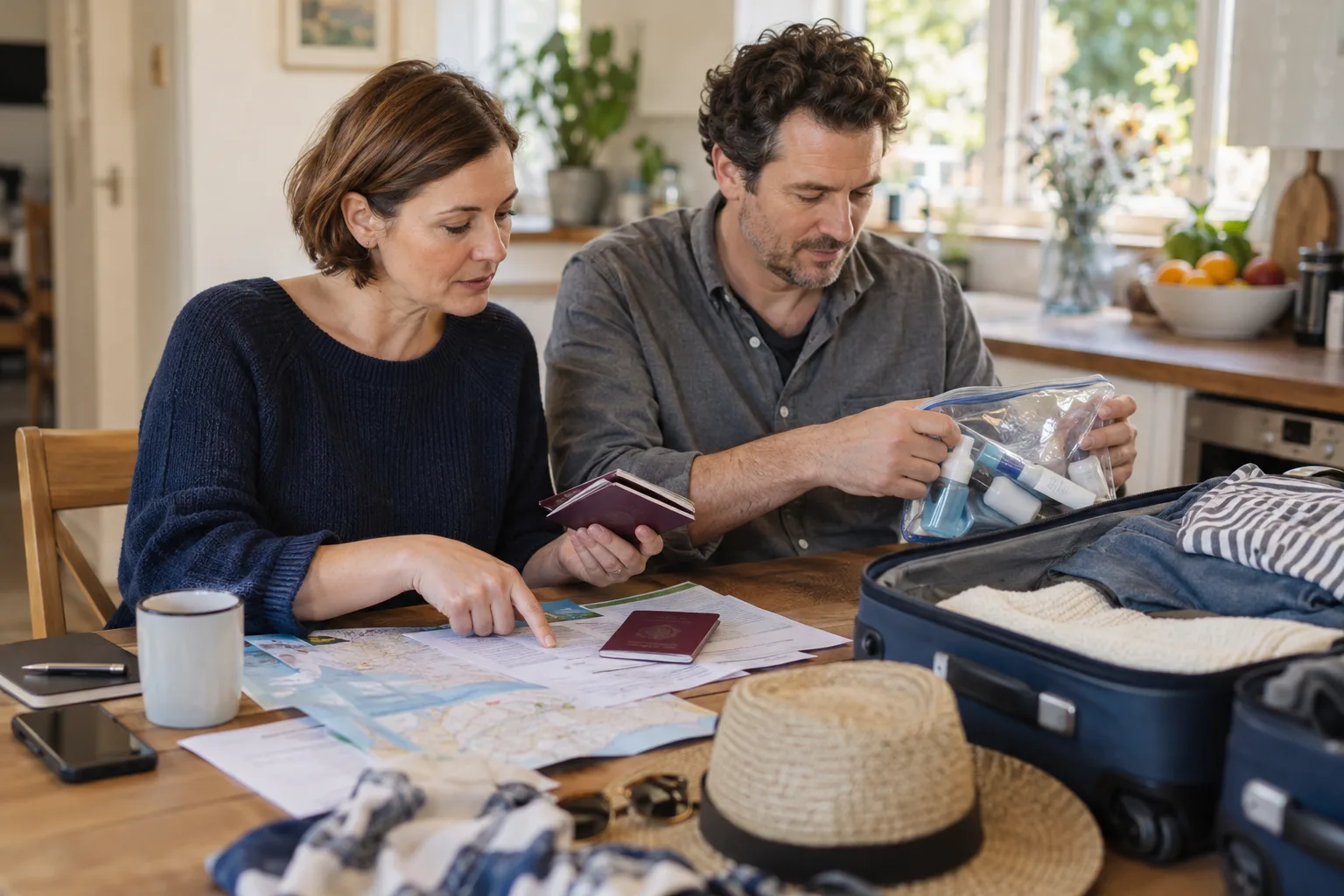
Our pre-travel holiday checklist is a useful starting point for documents and policy checks. For this trip, add a dated itinerary showing every excursion and transfer, so the insurer can assess the holiday you actually intend to take.
What people are saying
The British and Canadian authorities agree on the immediate response to demonstrations: stay away, monitor local developments and follow official instructions. Canada adds that protests can interrupt roads and public transport, and highlights Friday afternoons, particularly around mosques after prayers, as a period when gatherings may occur. That is useful information for arranging movements, not a prediction of trouble at a specific location.
For anyone who must visit remote desert areas, Canada recommends experienced local guidance, convoy travel, established tracks, adequate supplies and sharing an itinerary with someone at home. Those precautions address isolation and difficult conditions. They do not cancel a government warning or turn an advised-against holiday into a routine excursion.
Our practical recommendation is to question the operating arrangements, not just the guide’s experience. Who tracks the group’s progress? What communications are available away from towns? Who decides to abandon a route, and what happens if a vehicle breaks down? A useful answer explains the procedure rather than offering a general promise that everything is organised.
Another mistake is treating an operating hotel or available tour departure as evidence that official concerns no longer apply. Commercial availability and government risk assessments answer different questions. Our guide to safety checks before travelling abroad explains why the booking decision needs its own checks, even when a supplier is willing to take payment.
What happens next
Before you commit money
Request a written itinerary with named roads, stops and optional trips, then compare it with the latest FCDO boundaries. Ask the operator how an alternative route would work if protests or security developments disrupted travel. Get cancellation and amendment terms in writing, including who pays for additional accommodation or transport if plans change.
Do not assume an advisory automatically produces a refund from every supplier. Your position depends on the booking arrangements, applicable protections and contract terms. Keep the itinerary, correspondence and policy confirmation together; our advice on checking holiday prices during booking also explains why the final terms deserve attention before payment.
For an existing booking, sign up for FCDO email alerts and recheck advice before departure and before excursions. Save contact details for the British Embassy in Dakar: the embassy in Nouakchott cannot provide face-to-face consular services. Leave your route and operator’s emergency number with someone at home. If a proposed leisure trip enters an area where the FCDO advises against travel, our recommendation is to change the route or postpone it, rather than rely on a guide or an insurance assumption to bridge the gap.
Related: UAE travel advice: what Dubai holidaymakers need to check
Related: Guatemala travel advice: border warnings and insurance checks
Why this matters
For UK travellers, the decisive question is not simply whether Mauritania is open to visitors, but whether the exact holiday is sensible and properly covered. Ask for the route before paying a deposit, resolve insurance questions in writing and understand how help would reach you outside the capital. If those answers remain vague, pause the booking. Our guide to what to check before booking a more sustainable trip offers another useful test: look beyond the sales pitch and examine how the holiday actually operates.
From Before You Book Travel · Sponsor
Plan your trip with Becky
Tell Becky where you're dreaming of and she'll come back with a personalised holiday plan. No obligation, and no call centre.
Common questions
- is Mauritania safe for British tourists?
- Mauritania has significant security risks, and UK advice warns against travel to substantial parts of the country. Check the exact itinerary against current regional warnings; being outside a warning area is not a guarantee of safety.
- what changed in Mauritania travel advice?
- The UK advisory records a protest-related update on 24 March 2026. It warns of demonstrations connected with Middle East developments that can form with little notice. The advice is marked current on 13 October 2026.
- can I travel near the Mali border in Mauritania?
- The FCDO advises against all travel within 25km of the Mali border in southern Mauritania, including Khabou. Its broader eastern warning also affects route planning elsewhere near Mali.
- will travel insurance cover Mauritania?
- Cover depends on your policy and itinerary. Travelling against FCDO advice could invalidate insurance, so give the insurer your route and activities and request written confirmation before paying.
- where do British tourists get consular help in Mauritania?
- British nationals should contact the British Embassy in Dakar, Senegal. The British Embassy in Nouakchott cannot provide consular services in person.
- what should I do if there is a protest in Mauritania?
- Avoid the demonstration and large gatherings, follow local news and obey instructions from the authorities. Allow for disruption to roads and public transport rather than trying to pass through a gathering.
- does Canada have the same Mauritania travel warning as the UK?
- No. Canada recommends avoiding non-essential travel throughout Mauritania, with stronger warnings for specified regions. The UK applies geographically defined warnings rather than a countrywide non-essential-travel advisory.
Sources
- GOV.UK Foreign Travel Advice: Mauritania travel advice - GOV.UK
- travel.gc.ca: Mauritania travel advice
This article was written by Before You Book using the sources listed above. Product mentions are editorial unless clearly marked as sponsored.