Holiday Horrors
Booking.com scam sends guests to Parliament and a London pub
Hijacked accommodation listings left London visitors searching for flats that did not exist, while some customers say warnings failed to secure help.
By the Before You Book Editorial Team
Published · 6 min read
Quick answerA Booking.com scam used parliamentary offices and a London pub as addresses for fake holiday apartments. Booking.com says criminals accessed genuine accommodation accounts through phishing and that it suspended bookings; customers reported arriving to find nowhere to stay.
Timeline
10 August 2026
Wetherspoons said it alerted Booking.com to the fraudulent accommodation listing using its pub’s address.
17 September 2026
A reviewer reported losing €340 through the pub-address listing and receiving no response to their complaint.
20 September 2026
Reviews on the pub-address listing continued to include complaints about a lack of contact from Booking.com.
24 September 2026
The published investigation reported that both listings remained visible despite bookings being suspended.
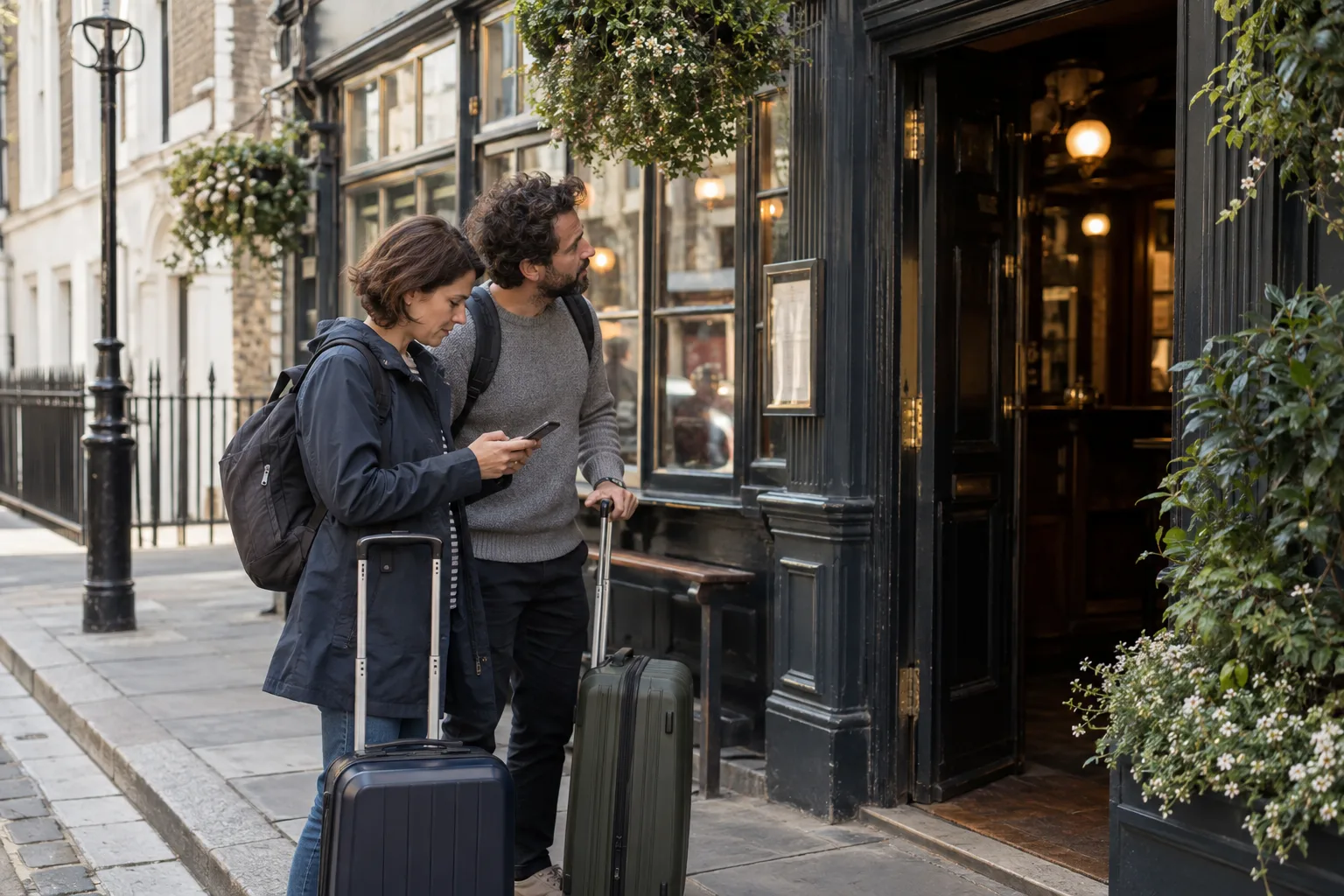
London visitors who booked apparent holiday apartments through Booking.com instead found themselves outside parliamentary offices or a pub, with no accommodation waiting for them. Some say they had raised the alarm before travelling, only to be told to attempt check-in before the platform would arrange another place to stay.
An investigation published by Which? Travel on 24 September 2026 documented the two fraudulent listings and customers’ accounts of being stranded. Booking.com said genuine accommodation businesses had suffered phishing attacks that let criminals access their accounts. The central consumer concern is not simply that convincing listings appeared: it is that warning the platform allegedly did not prevent guests reaching a dead end.
What happened
One listing advertised a Westminster flat under the name Apartments near Big Ben, using photographs of a real apartment but the address of Portcullis House. That building houses parliamentary offices, not holiday lets. Visitors arriving with bookings were turned away by armed security staff.
The second, marketed as London Crown apartments, used the address of The Liberty Bounds, a Wetherspoons pub near Tower Bridge. Pub staff found themselves explaining to disappointed travellers that their booked accommodation did not exist there. By the investigation’s publication, that listing had attracted more than 250 negative reviews.
Customer accounts describe consequences far beyond an irritating booking error. One reviewer said a journey from Manchester ended with a night in a car with four children. Another described herself and a friend being without accommodation in London at 2am. These are reviewers’ accounts, rather than independently established totals of people stranded.
Tony Walker, a customer interviewed for the investigation, said his Westminster reservation was priced at £243 for three nights, payable on arrival. Immediately after booking, however, an in-app message demanded bank details and threatened the loss of his reservation. He initially complied, then became suspicious and asked his bank to freeze his account.
Paul Dawson had booked London accommodation for a theatre trip with his wife and daughter. He said an email arriving two days later linked to a counterfeit Booking.com page requesting bank details. After discovering that the listed address belonged to a pub, he contacted customer support.
Dawson said he was nevertheless instructed to attend the address before relocation could be arranged. He explained that he had autistic children and that attempting check-in after a show ending at 10.30pm would be unmanageable. According to his account, that did not change the advice. Other reviews described similar instructions to turn up before help would become available.
The background
The apparent route into both scams was an existing accommodation account, rather than a completely new identity. The listings appeared to have previously belonged to genuine Somerset holiday cottages. Criminals seemingly replaced their names, photographs and addresses, giving a fraudulent offer the history of an established property.
There were inconsistencies. The Westminster listing’s web address still referred to Somerset, its telephone number had a California area code, and its postcode corresponded to Westminster Pier. None of those details alone proves fraud; taken together with an address inside the parliamentary estate, they warranted far more scrutiny.
Older reviews can complicate the picture when an account changes hands without permission. The pub-address listing retained some favourable feedback, including reviews relating to the original cottage. A respectable historical rating is therefore not enough: look at what recent guests describe and whether the location, property type and facilities match today’s advertisement.
The London Crown listing also displayed Booking.com’s Preferred Plus designation. The programme gives participating properties greater visibility in exchange for higher commission. It was not established whether the legitimate owner or the intruder had enrolled the account. Either way, a commercial prominence badge should not be treated as independent confirmation that an address is genuine.
The case also illustrates why an unexpected payment demand deserves a pause even when it arrives inside a familiar app. Access to a compromised accommodation account can let criminals communicate through a channel guests reasonably associate with their reservation. Verify a new demand through separately accessed customer support, not through the link accompanying it.
Keep the original payment terms as well as the confirmation. Our guide to online holiday prices changing during booking addresses a different problem, but preserving the agreed price and conditions is useful here too: it gives you something concrete to compare with a later demand.
What people are saying
Booking.com said its investigation found that phishing attacks had affected the accommodation businesses’ own computer systems, giving criminals temporary, unauthorised access to their platform accounts. It said the underlying properties were genuine businesses that had previously hosted guests, and that it had suspended bookings and was supporting affected customers.
That explanation distinguishes the original holiday cottages from the fraudulent London offers. It does not establish that the advertised apartments at either London address existed. Nor does the supplied response specify how every affected booking would be identified, when customers would be contacted or what individual refunds and relocation arrangements would cover.
Wetherspoons said it notified Booking.com on 10 August 2026 and called for stronger procedures to prevent fraudulent listings. Reviews nevertheless described reservations for the opening weeks of September. The report said new bookings on the pub-address listing had been blocked in August; previously made reservations and continued page visibility were separate issues.
There was another troubling source of reassurance. When researchers questioned Booking.com’s AI trip planner, Dot, it described both fraudulent offers as genuine. On the London Crown page, it supplied a list of supposed amenities rather than recognising the scam. An automated answer is not an independent property inspection or evidence that a host controls an address.
Our view is that requiring customers to test a credible fraud warning by arriving at the disputed property is an unreasonable approach to risk. Families and travellers with additional needs need an actionable plan before departure, not an experiment at bedtime. Our guide to safety checks abroad covers preparation, but advance planning cannot substitute for effective platform support.
What happens next
As of the 24 September report, both misleading listings remained visible despite bookings being suspended. Customers need to distinguish between stopping new sales, correcting a page and resolving existing reservations. The available account does not establish a completed refund programme or a resolution for every traveller affected.
If your booking looks suspicious
Start by saving the confirmation, listing address, payment terms, messages and screenshots of any demand for financial details. Contact Booking.com through the app or a website you open yourself. Ask for a case reference, written confirmation of the reservation’s status and clear instructions about cancellation or alternative accommodation.
If you have submitted bank or card details, contact your bank immediately using a trusted number or its official app. Explain exactly what information you shared and whether money has moved. Do not assume that cancelling a reservation also protects your account, or that a refund is automatic: the next steps depend on the payment and circumstances.
If already stranded, prioritise a safe place to wait. Ask support what replacement accommodation it authorises and what costs it will cover; retain receipts without assuming every expense will be reimbursed. Before departure, add an address cross-check and a saved support contact to your pre-travel holiday checklist.
Why this matters
A domestic city break can leave you just as exposed to an accommodation scam as a trip overseas. Before travelling, check that the address matches the property, read recent reviews and challenge payment requests that contradict your confirmation. For families or anyone needing accessible accommodation, ask for a workable alternative before setting off if a booking is disputed. Our holiday checklist is a useful place to keep those checks together. Platform branding, promotional badges and automated reassurance are not substitutes for a verified place to sleep.
From Before You Book Travel · Sponsor
Plan your trip with Becky
Tell Becky where you're dreaming of and she'll come back with a personalised holiday plan. No obligation, and no call centre.
Common questions
- what was the Booking.com Parliament scam?
- A fraudulent apartment listing used Portcullis House as its address. The building contains parliamentary offices, not holiday apartments, and customers arriving with bookings were turned away by security staff.
- were the London Crown apartments actually a pub?
- The fraudulent London Crown listing used the address of The Liberty Bounds, a Wetherspoons pub near Tower Bridge. Travellers arrived expecting accommodation that did not exist there.
- how did scammers access the Booking.com listings?
- Booking.com said phishing attacks affected genuine accommodation businesses’ computer systems and gave criminals temporary access to their accounts. The listings appeared to have previously advertised Somerset holiday cottages.
- is a bank details request in the Booking.com app safe?
- An in-app request is not proof that a demand is genuine. One customer reported receiving a fraudulent bank-details request through the app. Verify unexpected demands through support accessed separately, rather than following the supplied link.
- did Booking.com remove the fake London listings?
- Both listings remained visible as reported on 24 September 2026, although bookings had been suspended. That is the position documented in the investigation, not confirmation of their current status.
- what should i do if i gave scammers my bank details?
- Contact your bank immediately through its official app or a trusted telephone number. Explain what you shared and whether any money has moved, and preserve the messages and booking details.
- can Booking.com AI confirm a property is genuine?
- Do not rely on it as verification. In this investigation, Booking.com’s Dot trip planner described both fraudulent accommodation offers as genuine when researchers asked about them.
Sources
This article was written by Before You Book using the sources listed above. Product mentions are editorial unless clearly marked as sponsored.