Where to Go
Things to do in Luxembourg: a city break with room to roam
A compact capital, woodland walks and vineyard day trips make Luxembourg a persuasive alternative to the usual European weekend away.
By the Before You Book Editorial Team
Published · 6 min read
Quick answerThe best things to do in Luxembourg combine the capital’s gorge-side walks and historic Grund district with Vianden Castle, Mullerthal hiking and Moselle vineyards. We rate it for a short break that mixes city sightseeing with countryside, without changing hotels.
Luxembourg makes a strong case for a European short break that does not stop at the city limits. Its capital supplies the historic streets and handsome views; beyond it lie castle towns, sandstone walking country and vineyards along the German border. Our pick is a city-based stay with one carefully chosen countryside excursion, rather than a race around the whole country.
There is fresh evidence of growing interest. Figures attributed to Luxembourg for Tourism in June 2025 reported a 6% year-on-year increase in visitors. The summary does not identify the exact reporting period, so that number is an indication of momentum, not a full-year verdict. The more useful question for holidaymakers is what Luxembourg delivers once you arrive.
What happened
Luxembourg’s appeal rests on an unusually convenient combination: a capital worth exploring on foot and several very different landscapes within a small country. That makes it particularly interesting for couples or friends who want more variety than a weekend of museums and restaurant bookings, but do not fancy hiring a car.
The practical advantage: free transport
Luxembourg’s government makes domestic public transport free on buses, trams and standard-class trains. First-class rail travel is excluded, and you should check the fare for any journey crossing the border. This is a useful saving and removes the usual business of deciding which city transport pass to buy.
It does not make every outing effortless. Rural excursions can involve changes, a walk from the stop and a return timetable that needs checking before you leave. Plot the complete journey to a castle entrance or trailhead, not simply the nearest town. Free transport is most valuable when it serves the day you actually want.
Nor does it make Luxembourg a budget destination by default. Accommodation, meals and admission charges still determine much of the bill. Compare the full cost of a stay, including your journey from the UK, rather than allowing a zero transport fare to do all the persuading. Our holiday checklist of checks to make before you travel helps keep the less photogenic essentials in view.
The background
A capital best understood on two levels
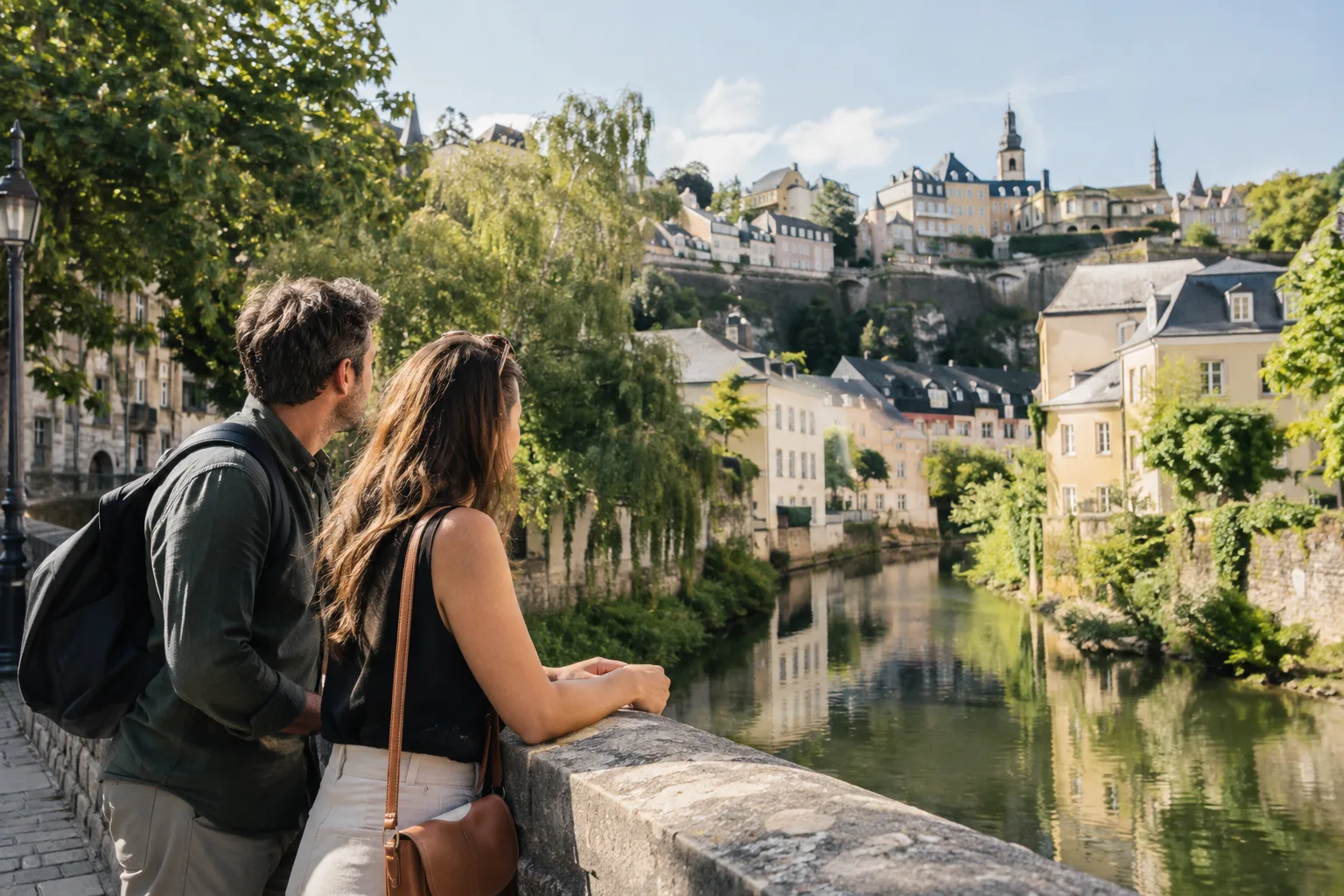
Start by getting your bearings above the gorge, then descend into the Grund. Luxembourg City’s changes in height are central to its character: looking across the valley and walking beside its river feel like different excursions, although both belong to the same urban centre.
The Chemin de la Corniche is a natural first walk for understanding that geography. Use it for views over the lower town before exploring the streets around the Grand Ducal Palace. Treat the palace exterior as a dependable sightseeing stop; if going inside matters to you, establish whether visits are available for your dates before building an itinerary around one.
Down in the Grund, the appeal is less about ticking off another major attraction than seeing the capital at river level. Allow time to linger rather than treating the descent as a quick detour. A map can make distances look deceptively modest when there is a substantial change in height involved.
For families with pushchairs and travellers with limited mobility, check step-free routes and public lifts before setting out. Choosing accommodation by walking distance alone can be misleading here. Look at the route between your hotel, transport stops and the places you intend to visit, including the climb home after dinner.
Choose your castle day
Vianden works well for travellers who enjoy a town as much as its headline attraction. The castle occupies high ground above the settlement, so the approach is part of the outing. Give the town time too: this is a better day trip when lunch and a wander are included, rather than squeezed between connections.
The chairlift offers another way to experience the valley, but it should not be mistaken for a lift to the castle door. Walking is still involved if you combine the two. Check its operating schedule and the route before deciding it solves an accessibility problem or suits young children.
Bourscheid is a separate option for those most interested in a dramatic hilltop fortification and its landscape. We would choose one castle on a first short visit, not automatically schedule both. The contrast between a castle day and a woodland walk adds more variety than a second set of battlements.
Woods or wine country?
Mullerthal is the choice for an active day. Its walking routes pass beech woods, streams and weathered sandstone, with narrow passages and rocky sections adding interest beyond an ordinary woodland stroll. Choose a named route that matches your fitness and available daylight; the region is not one single, uniformly easy walk.
Wear shoes with grip and carry water, a weatherproof layer and an offline route. Damp stone and uneven ground warrant more care than city pavements, especially with children. Our guide to safety checks before travelling abroad is a useful companion when a sightseeing holiday includes outdoor activity.
For a gentler excursion, head towards the Moselle, which forms part of Luxembourg’s border with Germany. Vineyards shape the slopes, and the local wine repertoire includes Riesling, Pinot Blanc and sparkling Crémant. Book a tasting directly if that is the purpose of the trip, rather than assuming a producer welcomes drop-in visitors.
The region’s cooking provides another introduction to its wines. F’rell am Rèisleck is trout served with Riesling sauce: a dish to look for if you would rather explore local flavours over lunch than arrange a cellar visit. Wine used in cooking should not be assumed to make a dish alcohol-free.
What people are saying
The tourism growth figure gives Luxembourg a timely talking point, but it does not tell us how crowded a particular trail feels or whether hotel rooms offer good value on your chosen weekend. Those judgements need dates and prices. There is no sound reason to turn a national visitor increase into a blanket warning to book immediately.
Our view is that Luxembourg’s strongest selling point is flexibility. A couple can pair a city day with a vineyard visit; a family can favour a castle; keen walkers can give more time to Mullerthal. The sensible common thread is a manageable itinerary, not an obligation to cover every region.
Car-free travel also changes how a holiday feels: you can watch the landscape instead of navigating it. Readers drawn to our scenic Scottish bus routes worth planning a holiday around will recognise the appeal, although Luxembourg’s rural connections still deserve the same careful timetable planning.
What happens next
For a first visit, we would plan three nights as a starting point, not a minimum requirement. Keep one full day for the capital and one for the excursion that most appeals. An extra night makes sense if you want both a substantial walk and a Moselle visit without rushing either.
Before paying, check accommodation cancellation terms, attraction opening calendars and the last practical return connection from your day trip. Keep a city-based alternative for poor walking weather. Luxembourg rewards curiosity, but the best version of this holiday leaves enough room to change your mind.
Related: Booking.com scam sends guests to Parliament and a London pub
Related: Seychelles by small ship: is this your next island holiday?
Related: Where to go in December: winter sun or a festive city break?
Why this matters
For UK travellers, Luxembourg offers a useful middle ground between a conventional city weekend and a touring holiday. The key booking decision is not how many sights you can fit in, but which excursion justifies the extra time away. Compare hotel locations by terrain and connections, check any paid attractions separately, and do not assume free transport covers travel beyond the border. Run through our pre-holiday checklist before committing, including passport validity, insurance and the conditions attached to your booking.
From Before You Book Travel · Sponsor
Plan your trip with Becky
Tell Becky where you're dreaming of and she'll come back with a personalised holiday plan. No obligation, and no call centre.
Common questions
- what are the best things to do in Luxembourg?
- Explore Luxembourg City’s Corniche and Grund, then choose between Vianden Castle, Mullerthal walking routes and the Moselle vineyards. We recommend combining a city day with one countryside excursion on a first short visit.
- is public transport free in Luxembourg?
- Domestic buses, trams and standard-class trains are free. First-class rail travel is excluded, and cross-border journeys have different fare rules, so check your specific route.
- how many days do you need in Luxembourg?
- We suggest three nights for a first visit, allowing a full city day and a countryside excursion. Add another night if you want both a substantial Mullerthal walk and a Moselle visit.
- does the Vianden chairlift take you to the castle?
- No, the chairlift does not deliver you to the castle entrance. Walking is still required to combine the attractions, so check the route and operating schedule before relying on it.
- where can you go hiking in Luxembourg?
- Mullerthal offers walking routes through beech woods and sandstone landscapes, with streams and rocky passages. Pick a route suited to your fitness, wear shoes with grip and allow for uneven or slippery ground.
- what wine is Luxembourg known for?
- Luxembourg’s Moselle vineyards produce Riesling, Pinot Blanc and sparkling Crémant. If you want a tasting, check availability and book with the producer rather than assuming you can drop in.
- can you visit Luxembourg without a car?
- Yes, a city-based holiday with day trips can work without a car. Check rural connections, the walk from the final stop and your return timetable before choosing an excursion.
Sources
This article was written by Before You Book using the sources listed above. Product mentions are editorial unless clearly marked as sponsored.